Smarter prep for India's toughest exam.
Study what matters the most.
UPSC current affairs, UPSC Foundations subject notes, PYQ-mapped MCQs and a study plan paced to your exam date. Every article is scored for exam relevance and tagged by GS paper, so your hours go where the marks are.
No payment details needed. From The Hindu, Indian Express and PIB.
- 25
- stories a month, picked from about 1,000 articles
- ~20 min
- a day for current affairs, not 3 hours
- ~55%
- less time on Indian Polity, practice included
- ₹0
- full access till Diwali, 8 November
Inside SeriousPrep
Real screens from the platform
Here's what changes when you prepare this way.
Daily current affairs
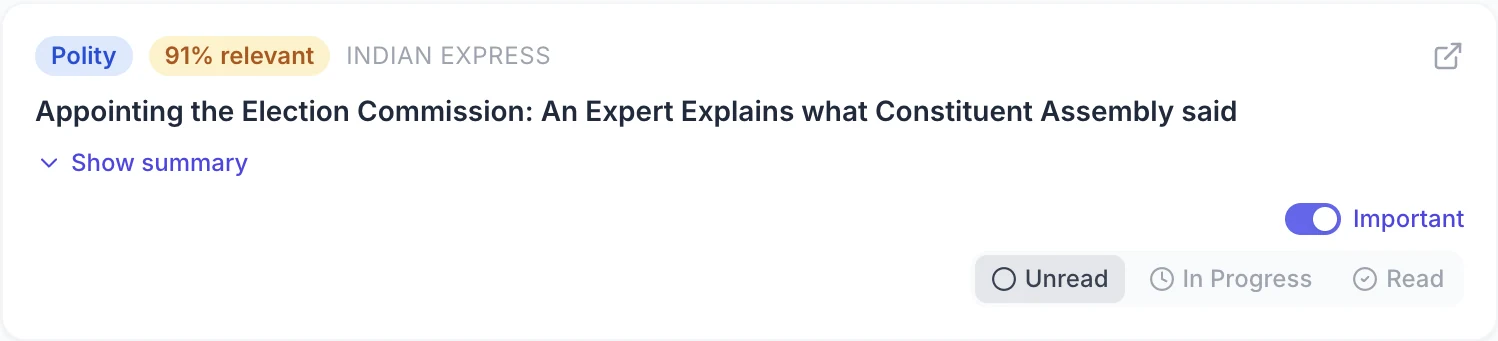
Know which news matters before you read it
Each morning's articles from The Hindu, Indian Express and PIB arrive scored, tagged and summarised for the exam.
- Relevance score on every article, so you start with what UPSC is most likely to ask
- GS paper coverage at a glance: today's split across GS1, GS2 and GS3
- Mark as important and track Unread, In progress and Read
- Monthly magazine: the month's 25 stories, ready for revision

Study planner
Your exam date. Your hours. A plan that bends.
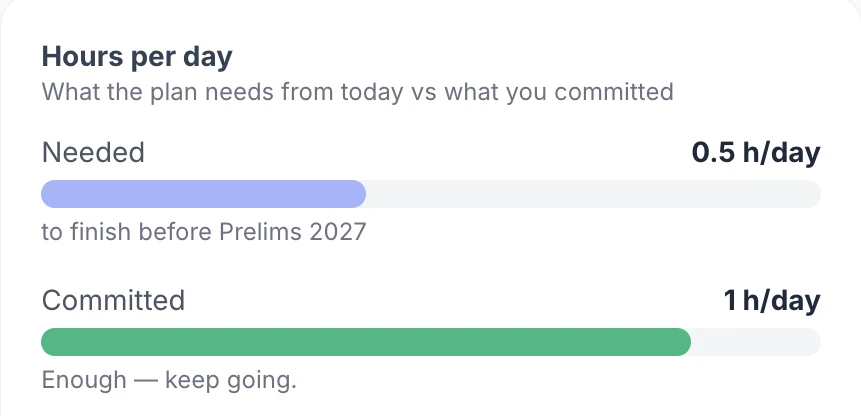
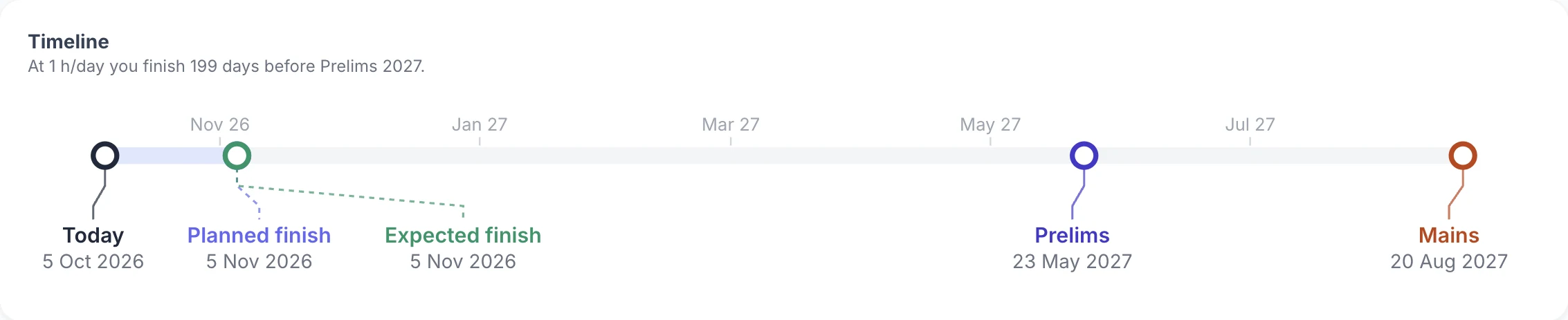
Set how many hours a day you can give. SeriousPrep works out your finish date and tells you if it's enough before Prelims.
- Hours needed vs committed, updated every day
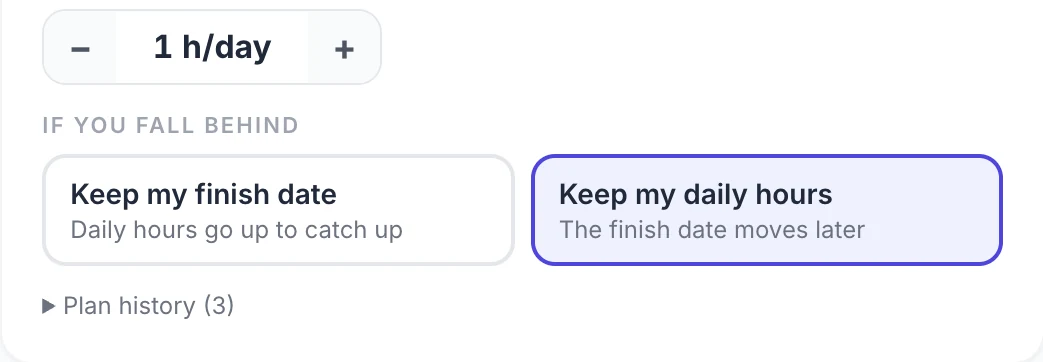
- Fall behind without panic: keep your finish date, or keep your daily hours
- Full syllabus or high priority: cover everything, or what UPSC asks most
Practice and revision
Reading is half the job. Recall is the other half.
Books stop at reading. Here, every topic comes with practice, and the platform shows you where you're slipping.
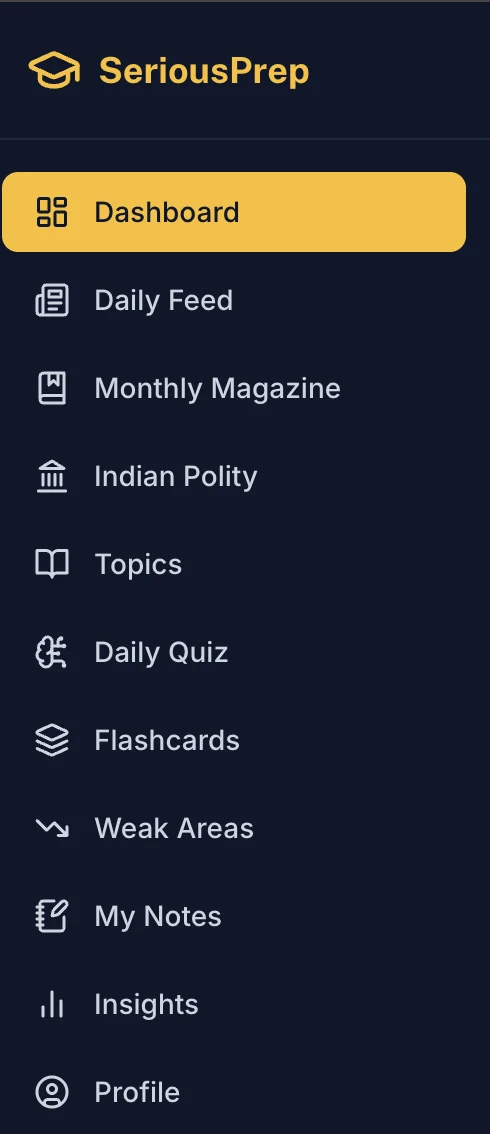
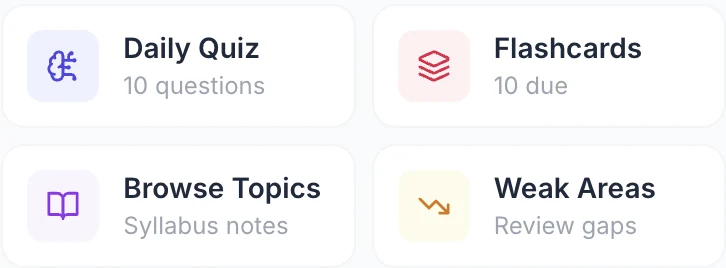
- Daily quiz with MCQs mapped to past UPSC questions
- Flashcards that come back when they're due
- Weak areas that show the topics to revisit
- My notes and insights alongside every topic
UPSC Foundations
Every core subject, from NCERT basics to exam level
Each subject is broken into topics and concepts, written from the NCERT textbooks up to what UPSC asks, with practice MCQs, previous-year questions and a study plan paced to your exam. Indian Polity is ready; more subjects are on the way.
- Indian PolityAvailable
- Indian EconomyComing soon
- Indian HistoryComing soon
- Indian GeographyComing soon
- EnvironmentComing soon
- Science & TechnologyComing soon
Indian Polity in about 52 hours. Practice included.
Reading the NCERT Polity chapters and a standard Polity textbook cover to cover takes about 98 hours, and that's before PYQs, MCQs or revision maps. UPSC Foundations: Indian Polity takes about 52, with all three built in: about 47% less time.
Explore Indian PolityEstimates at a careful study pace of 100 words a minute: 40 NCERT chapters (about 244,000 words) and a standard textbook (about 341,000 words).
Why SeriousPrep
Newspapers and books weren't written for the exam
They're essential reading. But most of an aspirant's day goes into finding what matters and turning it into notes. SeriousPrep does that part for you.
Current affairs, each day
Estimates based on typical aspirant routines.
No more hunting for relevant news
Articles arrive scored for relevance and tagged by GS paper.
Notes come ready-made
Background, syllabus link and exam angles are written for you.
Practice is built in
Every topic comes with PYQ-mapped MCQs and flashcards.
Revise one magazine, not a stack of papers
Each month is distilled into 25 stories.
How we compare
How SeriousPrep compares with other online options
Video courses and AI tutor apps have their place. SeriousPrep is built for one job: covering what matters in less time.
| SeriousPrep | Video lecture courses | AI tutor and chat apps | |
|---|---|---|---|
| How you learn | Focused notes, then practice | Long lectures, your own notes | Questions and answers on demand |
| What to study | Scored for relevance using past questions | Course schedule | Left to you |
| Current affairs | Daily feed plus 25-story magazine | Often a separate add-on | Summaries, rarely prioritised |
| Planning | Plan paced to your exam date and hours | Fixed batch timetable | None |
| Practice | PYQ-mapped MCQs, flashcards, weak areas | Usually a separate test series | Varies |
| Fits around a job | About 20 minutes a day for current affairs | Hours of video per subject | Flexible but unstructured |
General comparison of common formats, not of any specific provider.
Who it's for
Serious prep for serious aspirants
Repeat aspirants
You know the syllabus. Close the gaps: current affairs depth, weak areas and sharper revision before your next attempt.
Working professionals
Tell the planner you have an hour a day. It tells you whether that's enough, and what to study in it.
First-time aspirants
Start each subject from the foundation with UPSC Foundations, and build the current affairs habit from day one.
Launch offer
Free till Diwali. Founding-member price after.
Everything is free until 8 November 2026. Everyone who joins before then gets a founding-member price when paid plans begin. Paid subscriptions come with a 7-day, no-questions-asked refund.
Launch access
₹0
Daily current affairs, monthly magazine, UPSC Foundations with study planner, MCQs and flashcards, until 8 November.
Start freePreparation guide
How to prepare current affairs for UPSC
Current affairs touch every stage of the Civil Services Examination: Prelims questions, Mains answers in all four GS papers, the essay and the interview. The challenge isn't finding news. It's deciding which stories matter and remembering them months later.
- 1
Read with the syllabus open
Link every story to a GS paper and topic. If you can't place it in the syllabus, it probably doesn't need detailed notes.
- 2
Use past questions as your filter
UPSC repeats themes. Checking how a topic has been asked before tells you whether to learn the facts, the background, or the debate around it.
- 3
Cover the background, not just the headline
Most questions test the concept behind the news: the constitutional article, the scheme, the institution. Learn that first.
- 4
Revise monthly, not daily
Daily reading builds familiarity; monthly revision builds memory. Condense each month into a short set of connected stories and revisit them before Prelims and Mains.
- 5
Practise with MCQs
Testing yourself shows what you actually remember. Short daily quizzes on recent news are the quickest way to find gaps.
Free previews
Latest UPSC current affairs
Every note's background and first part of the concept are free to read. Browse all by month, GS paper or subject.
Delhi Draft Rolls Show Skewed Exclusion Under SIR Process
15 Oct · GS2 · Polity
New Audit Order Mandated for Multi-State Cooperative Societies
15 Oct · GS3 · Economy
Cabinet Extends and Renames National Social Assistance Programme Till 2030-31
15 Oct · GS2 · Polity
Government Launches BHAVYA Scheme for Industrial Parks
15 Oct · GS3 · Economy
Government Approves Sale of IDBI Bank to Strategic Buyer
15 Oct · GS3 · Economy
India to Join Southern Indian Ocean Fisheries Agreement as Full Member
15 Oct · GS2 · IR
Arunachal Protests Grow Over Siang Hydel Project Amid China Factor
14 Oct · GS2 · IR
Retail Inflation Spreads Across Items, Pressuring RBI on Rates
14 Oct · GS3 · Economy
Unapproved GM Cotton Traits Spread Despite Regulatory Ban
14 Oct · GS3 · Economy
Parties Back Caste Census but Avoid OBC Quota Amendment
14 Oct · GS2 · Polity
India's Need for a Trained Elderly Caregiver Workforce
14 Oct · GS2 · Society
India's Low R&D Spending Hurts Basic Science Research
14 Oct · GS3 · S&T
By month
By subject
UPSC Foundations
FAQ
Frequently asked questions
Is SeriousPrep free?
Yes. Full access is free until Diwali, 8 November 2026. No payment details are needed to sign up.
What happens after Diwali?
Paid plans begin. Everyone who signs up during the free period will be offered a founding-member price before it ends. Paid subscriptions include a 7-day, no-questions-asked refund.
Why isn't reading the newspaper enough for UPSC?
Newspapers are written for citizens, not aspirants. SeriousPrep picks the relevant articles, scores them for exam relevance, tags each with its GS paper, and adds the background and past-question angle.
Do I still need the NCERTs and standard textbooks?
Standard books remain valuable references. SeriousPrep's Polity notes cover the syllabus in less time, with PYQ-mapped MCQs and memory maps built in, so many aspirants use them for first reading and for revision.
How is SeriousPrep different from online coaching courses?
Most courses are built around hours of video lectures. SeriousPrep is built around focused reading and practice: scored articles, structured notes, MCQs mapped to past questions and a study plan paced to your exam. It works alongside a test series or coaching.
How does the study planner work?
Set your daily hours and the plan shows your finish date against Prelims and Mains. If you fall behind, choose whether to keep your finish date (daily hours go up) or your daily hours (the finish date moves).
How do you choose the 25 monthly stories?
We compare each month's news against patterns in past UPSC questions: which themes repeat and how current events are turned into questions. The stories most likely to matter make the magazine.
Which sources do you use?
The Hindu, The Indian Express and the Press Information Bureau (PIB), among others. Our notes are written for the exam and link back to the original reporting.
Is SeriousPrep available in Hindi?
Not at the moment. SeriousPrep is currently in English.
Is SeriousPrep connected to UPSC?
No. SeriousPrep is an independent preparation platform and is not affiliated with the Union Public Service Commission.
Prelims 2027 is closer than it looks
Set your plan today. Everything is free till Diwali.